
250 Pupils Join Politics in Action for an Inspiring First Local to Global Event
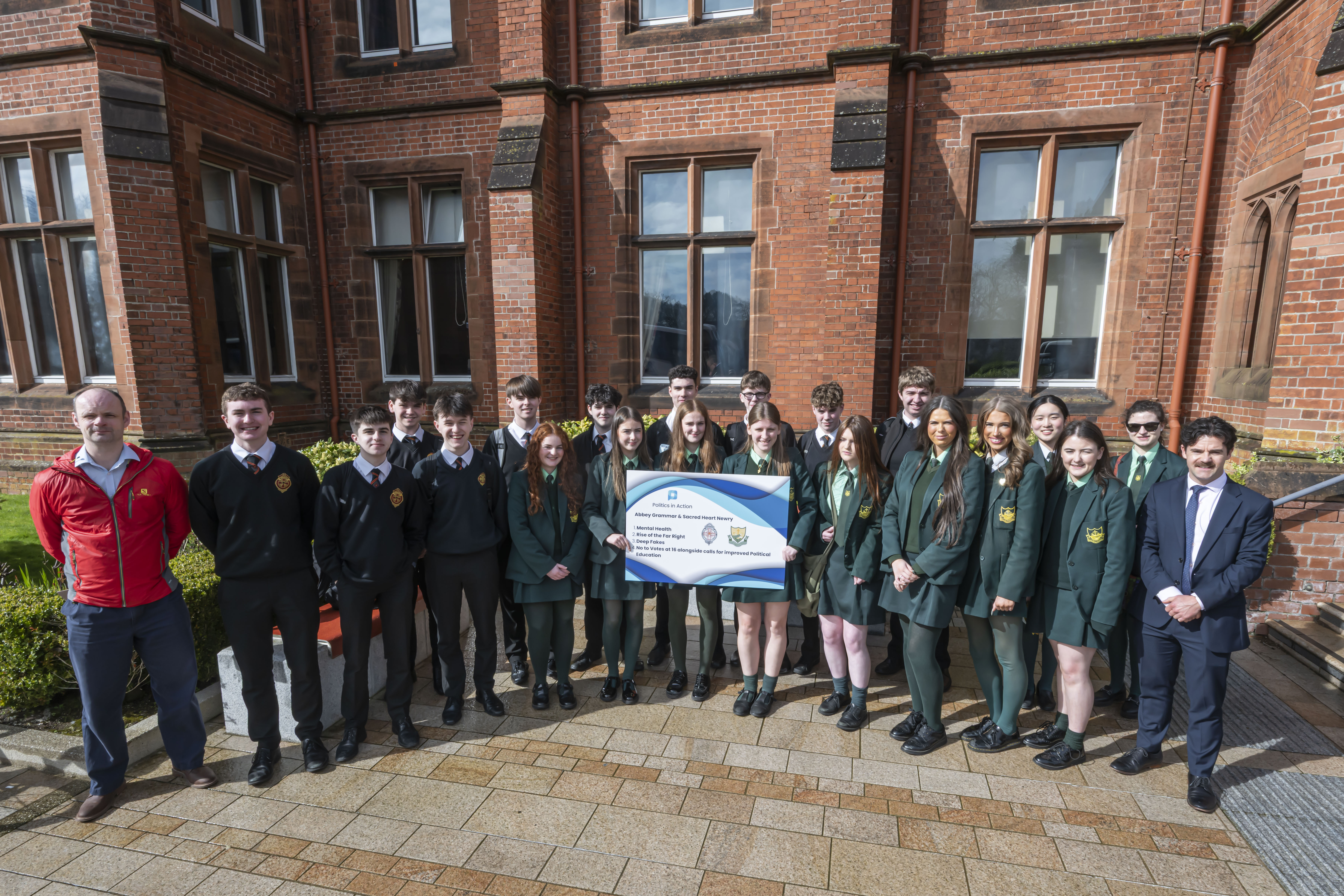
Politics in Action were delighted to hold our first Local to Global event on the 27th March in Belfast at Queen University’s Riddel Hall, in collaboration with QUB, Belfast City Council, the Education Authority(Shared Education Team) and the Ram Foundation.
250 pupils from schools across Northern Ireland and Donegal,from Belfast to Ballymena, to Newry and Magherafelt joined in an engaging and enlightening exploration of local issues. Many of these had a wider global context, such as the impact of artificial intelligence, the climate crisis,violence against women and girls and the rise of the far right. During the event students were also able to present the ideas they have been working on in their local school clusters to their peers, politicians and other guests in attendance.
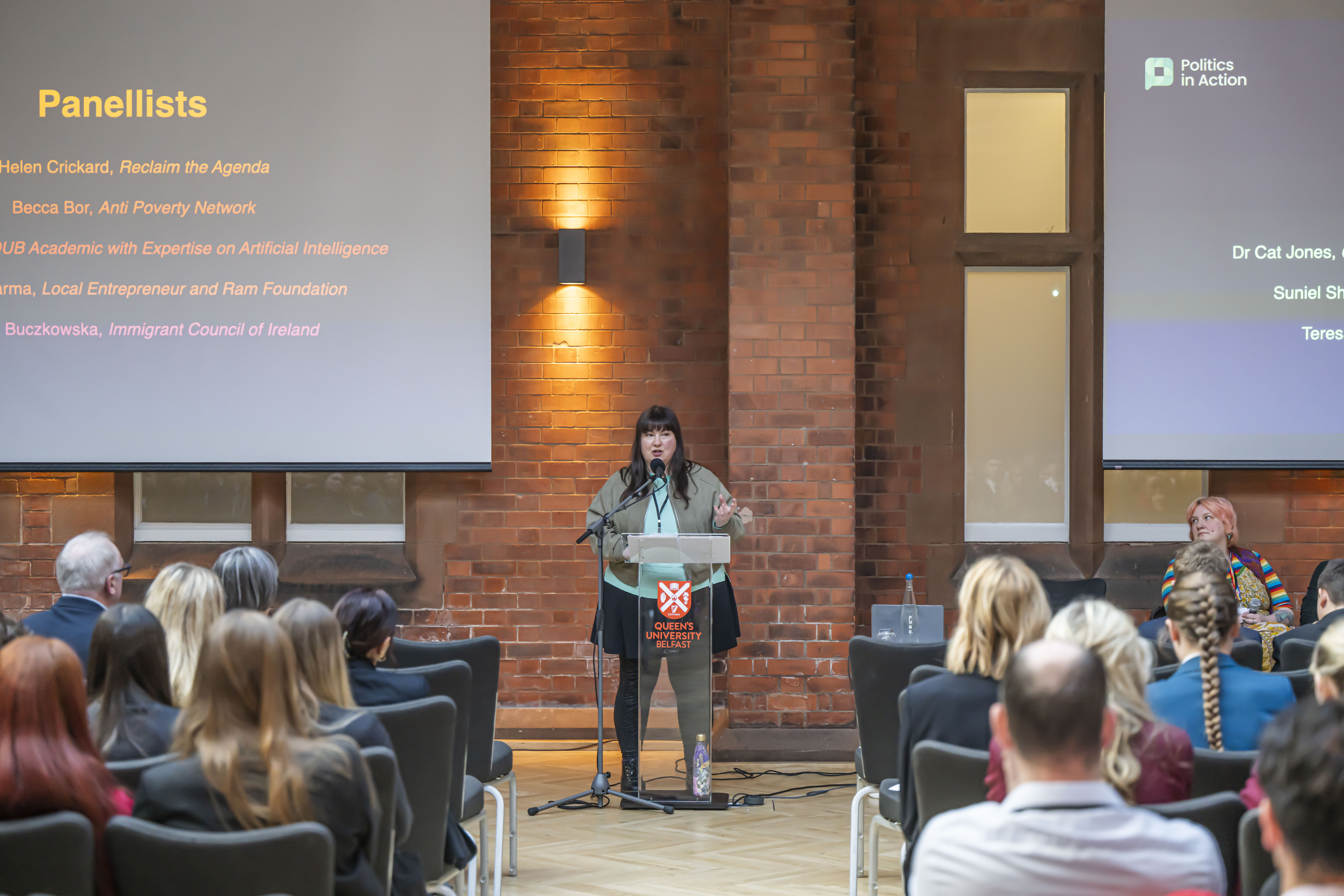
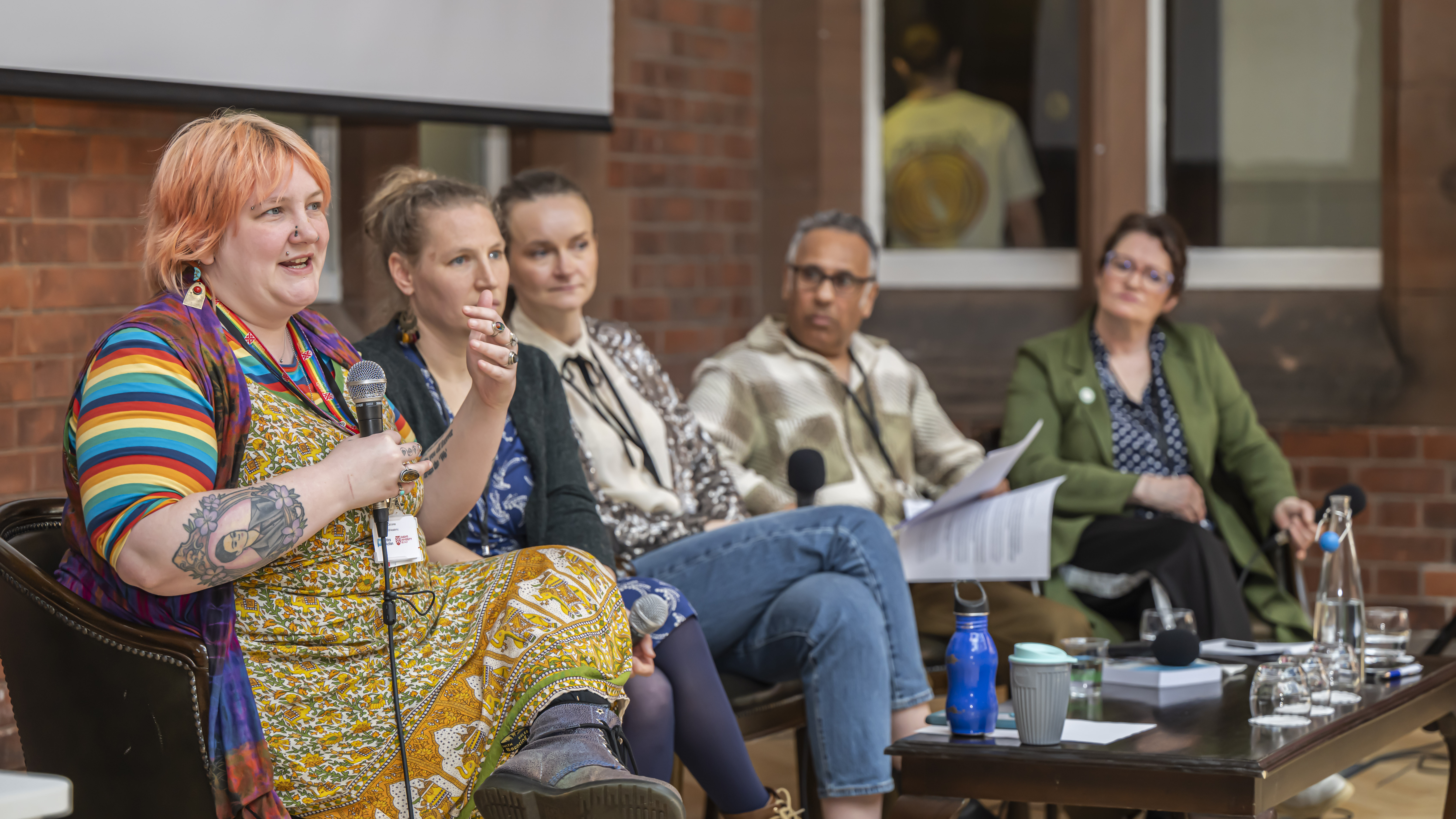
Amanda Ferguson was our brilliant MC for the day and among our guests were our panellists Dr Cat Jones from Climate, Biodiversity and Water at Queen’s University Belfast, Helen Crickard from Reclaim the Agenda, Teresa Buczkowska from the Immigrant Council of Ireland, Becca Bor from the Anti-Poverty Network NI and local entrepreneur Suniel Sharma. We also welcomed politics teachers from across Belfast.
To start the event, Amanda Ferguson invited our Executive Director, Paul Smyth onto the stage to welcome guests and introduce President and Vice-Chancellor of Queen's University Belfast, Sir Ian Greer, who reinforced the events theme of collaboration, education and having young peopleat the centre of what we do.
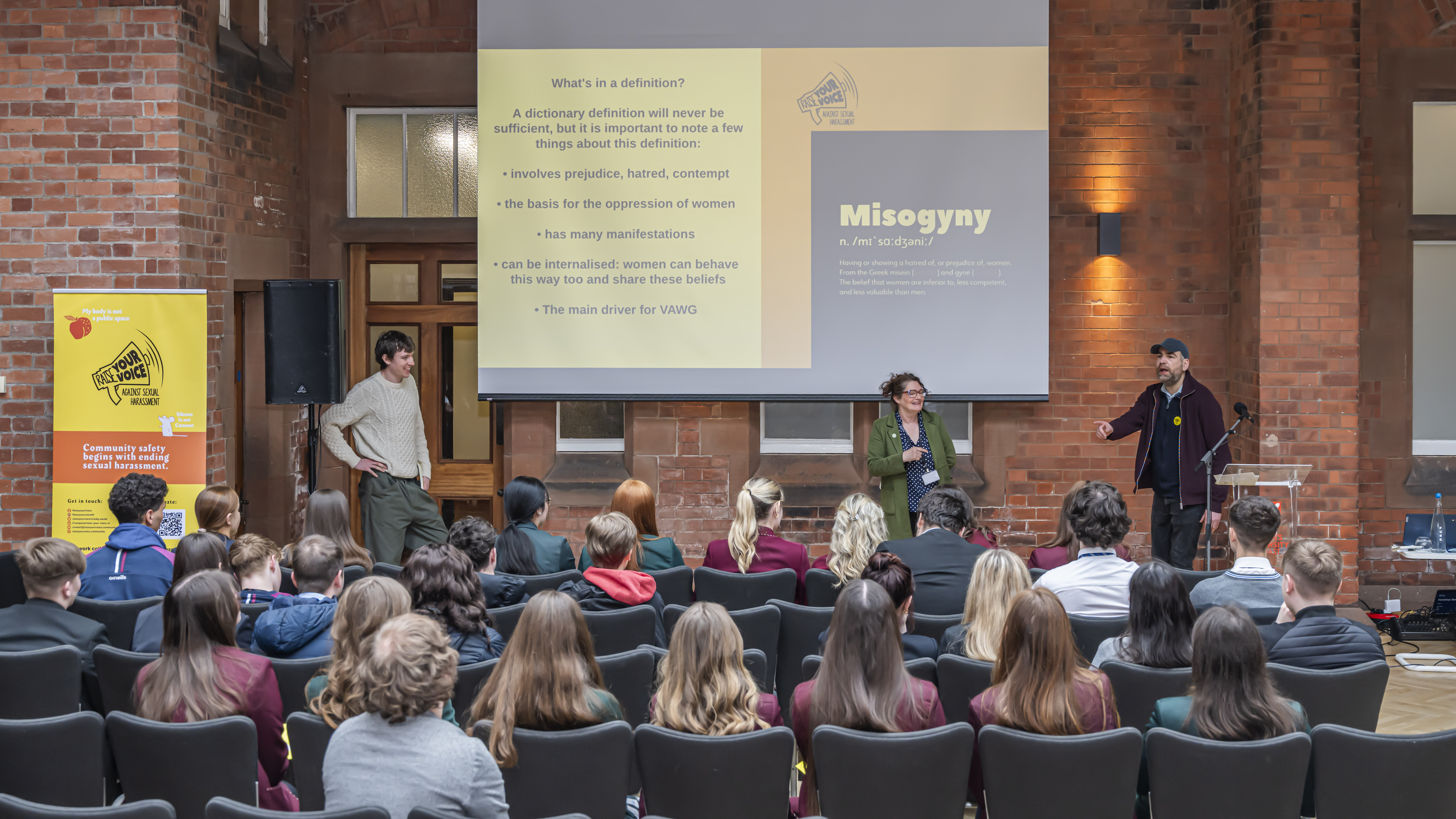
The event’s first set of workshops covered a wide range of topics. One of these was Misogyny and Violence against Women and Girls, hosted by Helen Crickford, the co-founder of Reclaim the Agenda. Reclaim the Agenda campaigns against poverty and all forms of discrimination. It campaigns for a healthcare system that meets women’s needs, a society where women are equally represented as decision makers, affordable, flexible childcare and a world free of violence and sexual abuse. Accompanied by her enthusiastic colleagues Helen discussed the shockingly high rates of sexual harassment that young women face and commonsayings that feed everyday misogyny.
The Anti-Poverty Network hosted a workshop exploring Wealth Inequality. This was led by its Development Coordinator, Becca Bor. Becca has a background in education, community development, participatory practices, trade union activism and campaigning for social change.
Teresa Buczkowska, CEO of Immigrant Council of Ireland hosted a workshop focusing on migration, exploring the challenges that migrants face and challenging the narrative surrounding the impact on housing and healthcare that migration brings. Teresa urged pupils to see the benefits that migrants bring, their contributions to society and highlighted how issues suchas housing are ones that we all share. Her message was simple but powerful; we share more in common than there are differences between us.
This message was echoed by the Rise of the Far-Right workshop hosted by Dessie Donnely. Dessie is a seasoned trade unionist and social justice warrior. His workshop explored the tactics of the far right, how they exploit people’s concerns about immigration and how they target ethnic minorities and asylum seekers at hotels, their own houses, businesses and places of worship. Many of these take the form of protests organised via social media. Among the examples illustrating the consequences of such tactics was the tragic story of Anu Okusanya in Newry in 2024. Anu was a nurse who died from an asthma and heart attack after running away from the scene of a racially motivated incident.
After the workshops, we had our panel. During the panel discussion, pupils were invited to ask questions, all of which demonstrated a keen insight and genuine passion for the issues discussed. From these, it was also clear that pupils were eager to tackle the challenges they and future generations will face. Some of those raised included the ramifications of those who use artificial intelligence for nefarious purposes and where responsibility lies, how much regulation is appropriate in the tech sector and the impact of AI on graduate job opportunities. Other issues discussed included the rise of apathy in politics, how artificial intelligence is damaging critical thinking in younger generations and their sense of individuality. The Panellists’ own words echoed many of these concerns, highlighting the power of big tech, the monetisation of artificial intelligence and the impact on us as individuals and wider society. Yet, there was also a message of hope toward a better world driven by wealth equality and human rights by Becca Bor. As Teresa Buczkowska also told pupils; as daunting as these challenges seem, it is vital that you do not lose hope. You have the power to change the future.
Before everyone headed for a well-earned lunch, Campaigns Organiser at Politics in Action, Emily Crudden McIlhatton, introduced the premiere of Politics in Action’s Votes at 16 film. This showcased the hard work of our young Votes at 16 campaigners and their journey to Westminster Parliament last Summer, where they collaborated with Democracy Classroom to launch the Roadmap to Votes at 16. This was received with a well-deserved round of applause. The film has been produced by QUB Film students who completed placement with Politics in Action and who accompanied the Votes at 16 campaigners on their trip to Westminster. We were so excited to launch this film, be sure to watch on our Youtube Channel or share it on our socials @votesat16ni!
During lunch, the young people had the opportunity to showcase their projects from this year, sharing their ideas with their peers, teachers and politicians.
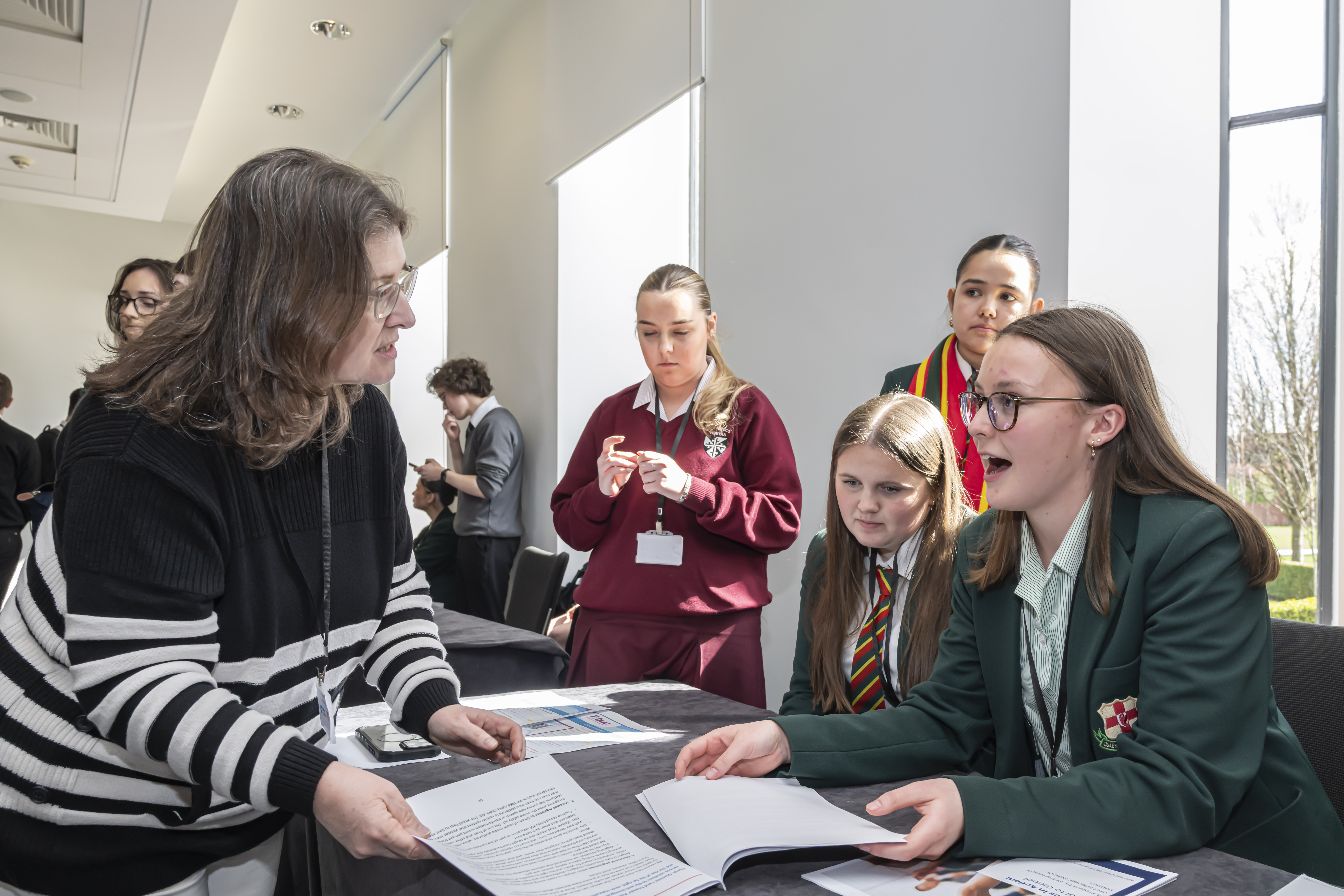
Towards the end of the event, Paul reflected on what was an inspiring day of learning for everyone involved, followed by remarks from QUB’s Ryan Feeney with his closing words for the attending pupils: The future is yours to make.
Make Change Happen Today


